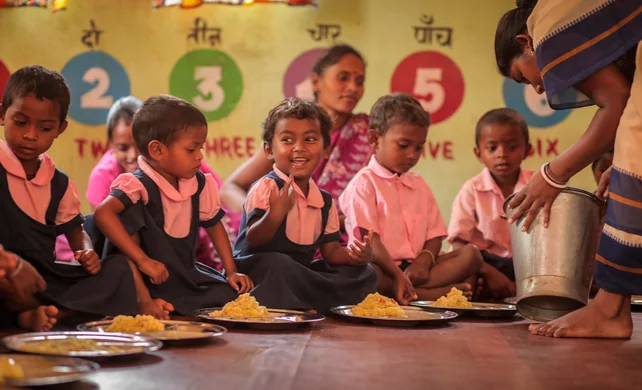
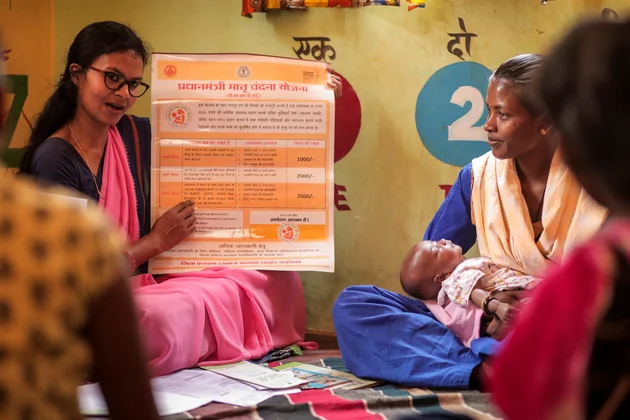
Despite the presence of government nutrition and maternity benefit programmes, many tribal women and children in Jharkhand face barriers in accessing their entitlements due to limited awareness, documentation challenges, gaps in service delivery and weak last-mile implementation.
To address these challenges, IPE Global's Centre for Knowledge and Development (CKD), with support from the Children's Investment Fund Foundation (CIFF), implemented Suposhit Jharkhand (Matrix of Change – Nutrition) from March 2021 to March 2024.
The project aimed to make maternal and child nutrition a priority in Jharkhand by strengthening the implementation, accountability and utilisation of two flagship government programmes:
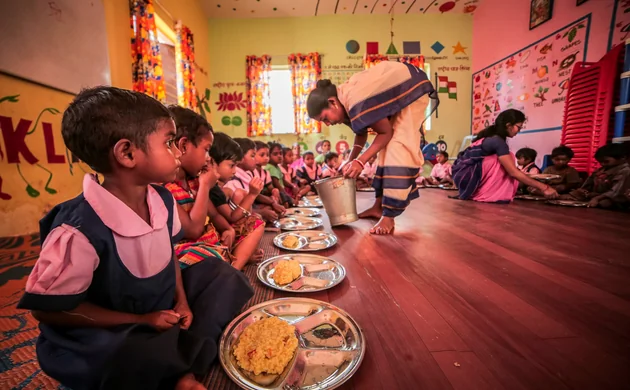
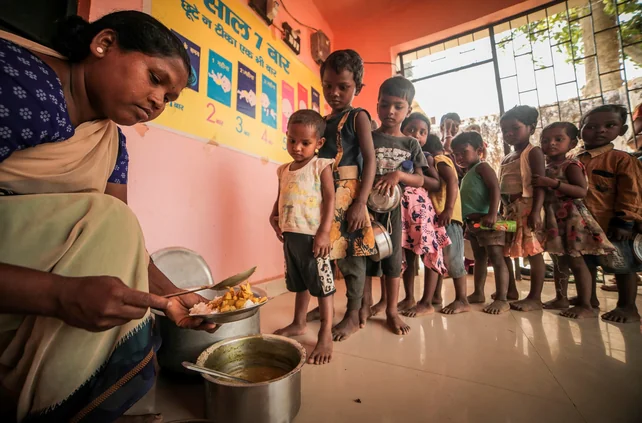
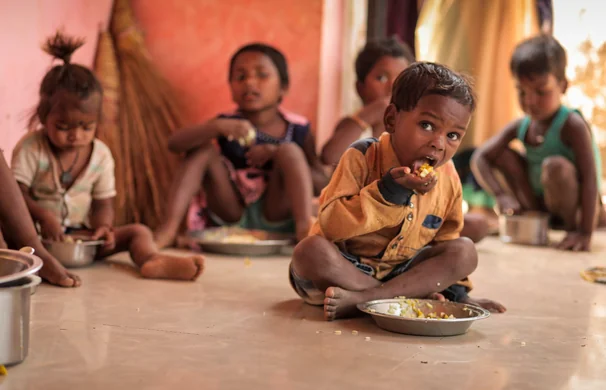
Supplementary Nutrition Programme (SNP) under the Integrated Child Development Services (ICDS).
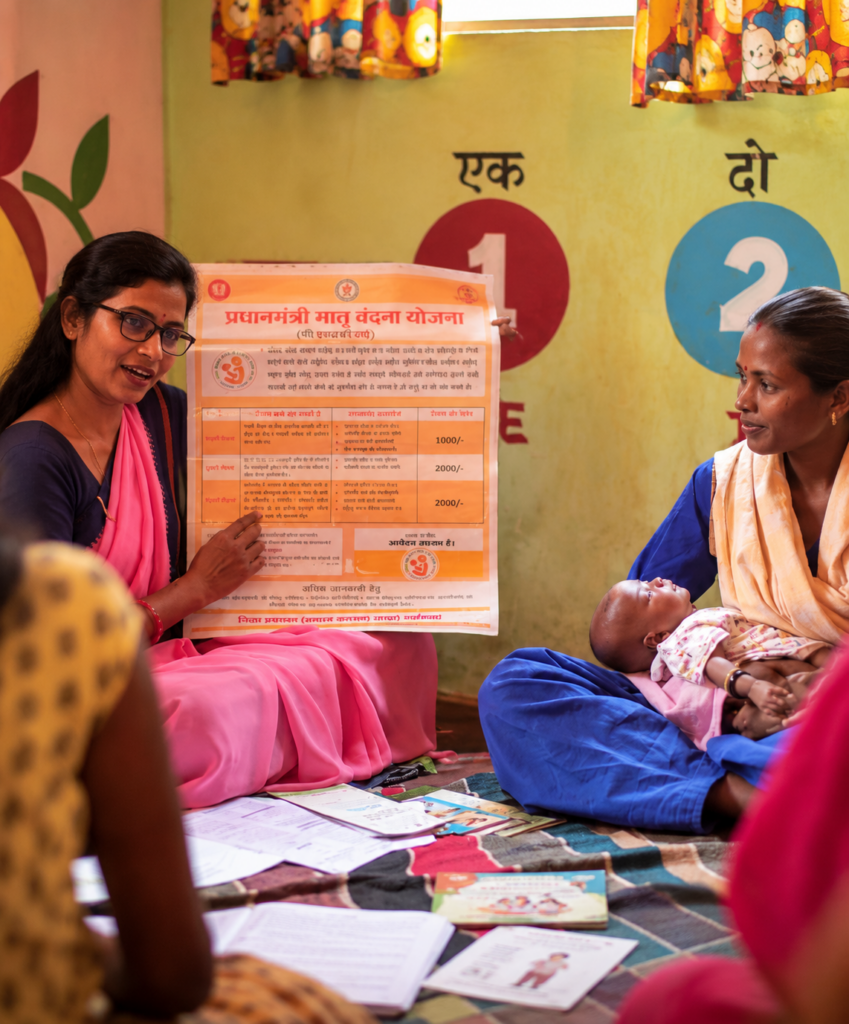
Pradhan Mantri Matru Vandana Yojana (PMMVY), the maternity benefit programme.
Adopting a combination of top-down and bottom-up accountability approaches, the initiative sought to improve awareness, increase beneficiary registrations, strengthen access to quality nutrition services and support better utilisation of government resources. The three-year initiative was designed to benefit approximately 500,000 tribal women and children.

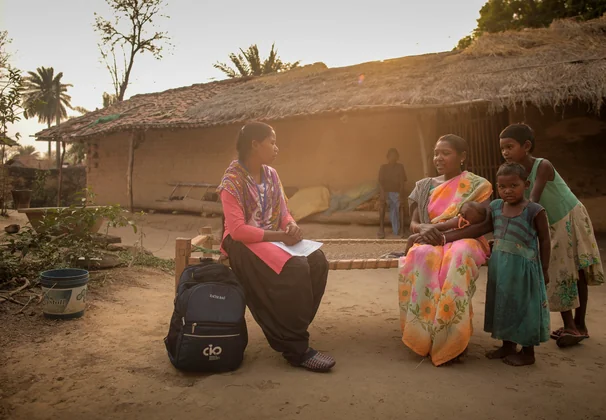
The project was implemented across five districts of Jharkhand – Ranchi, Khunti, Gumla, Simdega and West Singhbhum.
Its field interventions covered:
Conducted village-level awareness sessions for women, potential beneficiaries and frontline workers on SNP and PMMVY. Sessions covered eligibility criteria, entitlements, registration procedures, documentation requirements, maternity benefits, supplementary nutrition and the appropriate preparation and consumption of Take-Home Ration (THR).
Worked closely with Anganwadi Workers (AWWs), Lady Supervisors and district officials to identify eligible but unreached beneficiaries and facilitate their registration under SNP and PMMVY. Supported documentation, Aadhaar corrections, bank account opening, MCP card availability and follow-up of pending applications.
Trained frontline workers on the Poshan Tracker and provided handholding support to improve beneficiary registration, data entry and Aadhaar verification. Supported AWWs in strengthening records and improving the accuracy and completeness of beneficiary information.
Conducted regular monitoring and follow-up at Anganwadi Centres to assess the distribution, quality and quantity of supplementary nutrition entitlements. Engaged with district administrations, the Department of Women and Child Development, health officials and local governance institutions to address implementation bottlenecks and strengthen coordination.
Used formative research to identify barriers to accessing government nutrition schemes and inform intervention strategies. Engaged government departments and district administrations to strengthen programme implementation, build stakeholder capacity and support grievance redressal and timely resolution of beneficiary issues.
The project generated measurable progress in community awareness, beneficiary registration, frontline capacity and access to government nutrition and maternity benefit schemes.
Suposhit Jharkhand demonstrated how strengthening community awareness, frontline capacity, administrative coordination and beneficiary-level monitoring can help address persistent gaps in government nutrition service delivery.
By connecting eligible beneficiaries with their entitlements and supporting frontline workers and government functionaries, the project contributed to strengthening the last-mile delivery of maternal and child nutrition services in tribal communities.
Its integrated approach to social accountability and institutional strengthening offers valuable lessons for improving access to public welfare programmes and making nutrition governance more responsive, inclusive and accountable.
The project was implemented in collaboration with the Government of Jharkhand and its relevant departments and frontline service delivery systems.