
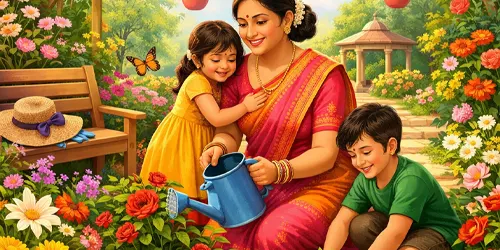
Ek Baag har Maa ke naam – Garden for every Mother
Every meal that lands on the family’s plate carries the invisible effort of women of the family. Women spent a significant portion of their day planning, then cooking and serving meals to each of the family member tailored to their liking. Meals and food preferences – what to eat? what’s in the next meal? – often form the core of daily conversations between mothers and their families. What initially appears to be an ordinary routine, actually reveals deeper layers of care, responsibility, and influence. It made us reflect – perhaps this is a quiet but profound form of empowerment, where mothers express through the choices they make for their loved ones. In attending to everyone’s tastes and well-being, they create spaces of connection, nurture, and subtle strength within the household.
Looking from another viewpoint, it’s the women in the household who silently hold the delicate thread of food security for their families in villages and towns. In today’s world of soaring prices and shrinking incomes, ensuring basic calorie count through three meals becomes difficult and meeting nutritional needs an uphill battle. Being the silent managers, women tend to swap vegetables for cheaper starches, dilute dairy products, stretch a handful of lentils and rice. As a nation, we are experiencing food insecurity – 56% children under five years of age suffers food deficiency and 55% women of reproductive age are particularly susceptible to both hidden hunger and micronutrient deficiencies.
Fostering integrated approaches that combine education on healthy diets and public health measures, nutrition gardens help households adopt sustainable practices, ensure access to fresh produce, and promote long-term well-being. It is basically a home garden used to grow a seasonal variety of vegetables, herbs and fruits that enables families to have a reliable source of vegetables and supports financial savings on groceries, season after season. Even in the last Poshan Maah, an annual movement under Poshan Abhiyaan – convergence based program by Department of Woman and Child Development, Ministry of Health and Family Welfare it was recognised. Eighth Rashtriya Poshan Maah 2025 had a theme on Holistic Approach to Nutrition – Ek Ped Maa ke Naam as its intervention to promote sustainability and nutrition awareness.
Adopting the intervention to Ek Baag Maa Ke Naam – strengthens families, food security, and women’s empowerment. By creating nutri-gardens, households gain access to fresh, nutritious produce every season, ensuring wholesome meals daily. Each vegetable sapling becomes a tribute to the love, hidden resilience, and silent strength of women who hold their families together. It stimulates a sense of pride, transforming their everyday efforts into a lasting symbol of sustenance and empowerment. Nutri-gardens- where care grows, and empowerment blooms.
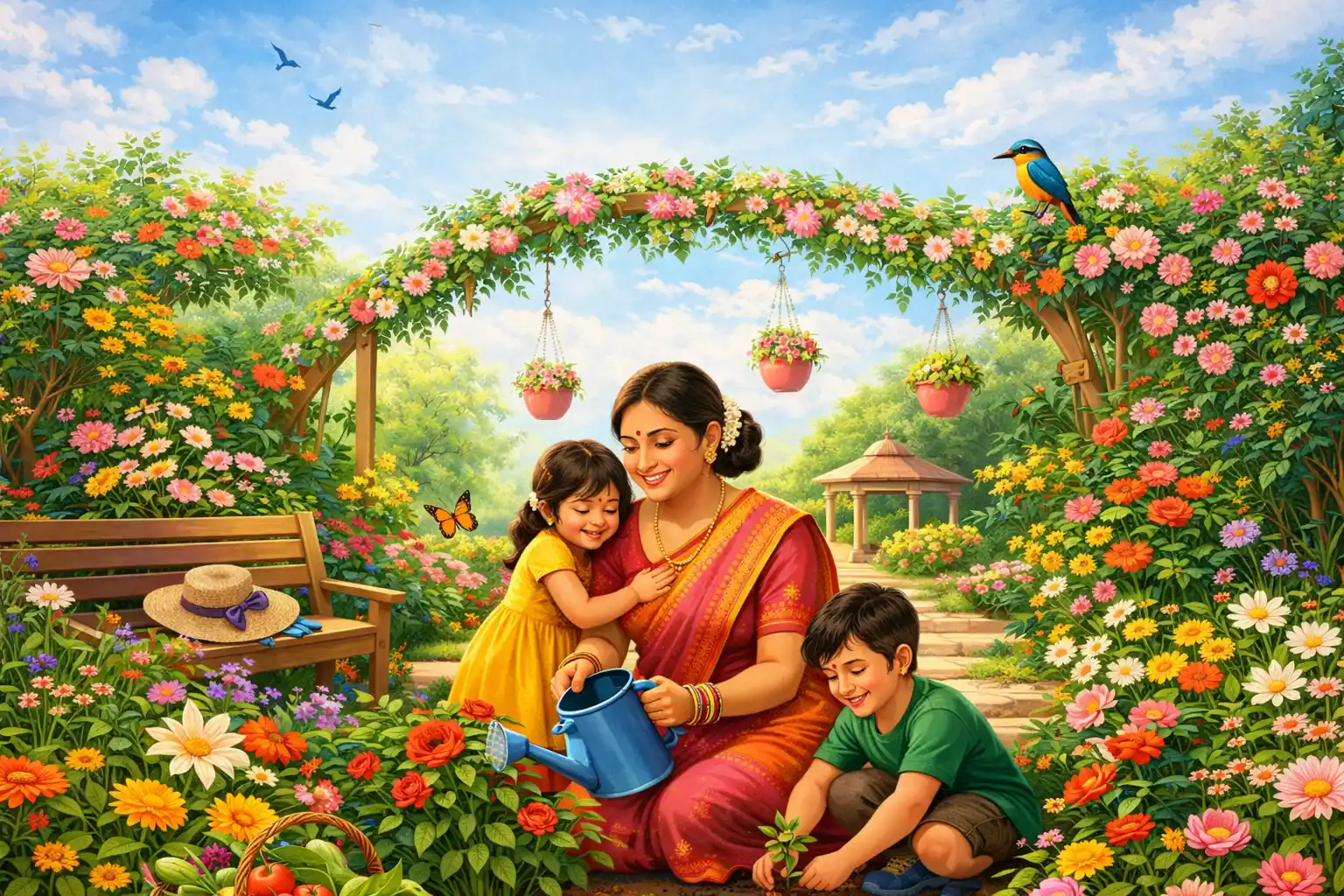
Under the Prabhat Nutrition Program, this approach has been operationalised at scale with 12,623 nutri-gardens distributed across five districts in Gujarat, Maharashtra, Punjab and Dadra and Nagar Haveli. One of our beneficiaries, Shardaben from Mithirohar village in Gandhidham shared that she makes a daily savings of approximately INR 70-80, which adds up to INR 2400-2500 per month from the nutri-garden provided. Shardaben is a mother of four school-going children and works as a cook in the village school expressed that with the right support she can now easily take charge of her family’s nutrition and well-being. Similarly, Mr. Tarsem from Nalas Kalan village in Rajpura extended his thanks by sharing, earlier they were spending money but were not sure what they were eating. Her adolescent granddaughter Varsha was also experiencing early symptoms of anaemia and were seeking sustainable nutritional support. It was beyond their imagination that the empty space in their backyard could be put to that use.
Ek Baag har Maa ke Naam stands as a reminder that when mothers are supported with simple, sustainable tools, they do not just grow vegetables – they cultivate healthier families, stronger communities, and a more nourished future.
Vasundra Kapoor, Megha Paul
References:
Chopra, H., Paul, B., Virk, A., Pandey, G., & Lahariya, C. (2023). Triple burden of malnutrition among children in India: Current scenario and the way forward. Indian Journal of Pediatrics, 90(Suppl 1), 95–103. https://doi.org/10.1007/s12098-023-04739-x
International Institute for Population Sciences (IIPS) & ICF. (2021). National Family Health Survey (NFHS-5), 2019–21. Mumbai, India: IIPS.
Ministry of Health and Family Welfare (MoHFW), Government of India, UNICEF, & Population Council. (2019). Comprehensive National Nutrition Survey (CNNS) National Report. New Delhi.
Nambiar, A., & Arunachalam, D. (2025). Child food deficiency in India: Socio-demographic and regional patterns. Child Indicators Research. Advance online publication. https://doi.org/10.1007/s12187-025-10246-6
Singh, S. K., Chauhan, A., Sharma, S. K., Puri, P., Pedgaonkar, S., Dwivedi, L. K., & Taillie, L. S. (2023). Cultural and contextual drivers of triple burden of malnutrition among children in India. Nutrients, 15(15), 3478. https://doi.org/10.3390/nu15153478