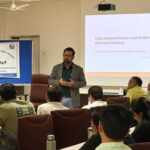
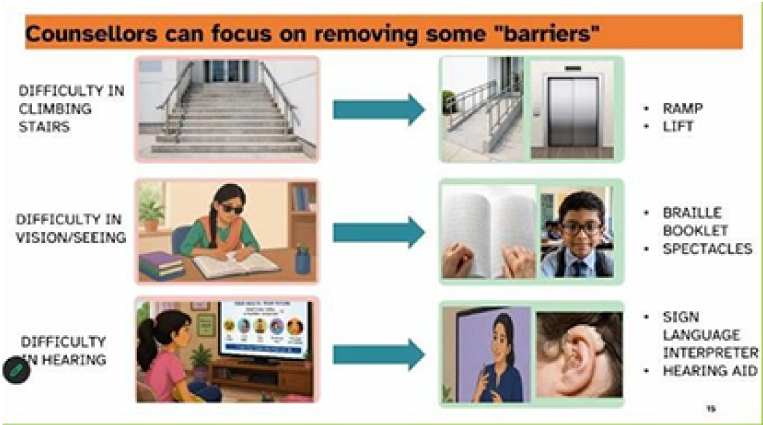
On 29 July 2026, a virtual capacity-building session on “𝐁𝐮𝐢𝐥𝐝𝐢𝐧𝐠 𝐒𝐤𝐢𝐥𝐥𝐬 𝐟𝐨𝐫 𝐒𝐞𝐧𝐬𝐢𝐭𝐢𝐯𝐢𝐭𝐲 𝐓𝐨𝐰𝐚𝐫𝐝𝐬 𝐃𝐢𝐬𝐚𝐛𝐢𝐥𝐢𝐭𝐲 𝐢𝐧 𝐀𝐅𝐇𝐂 𝐒𝐞𝐫𝐯𝐢𝐜𝐞𝐬” was conducted as the first in a series of national trainings for Adolescent Friendly Health Centre (AFHC) counsellors. The training forms a part of the Ministry of Health and Family Welfare’s growing adolescent health initiatives, implemented with UNFPA India’s support and continued commitment to the “Leaving No One Behind” agenda. The aim is to strengthen disability-inclusive AFHC services across India. The session focused on enhancing participants’ understanding of different types of disabilities and strengthening inclusive counselling skills.
The session was attended by Dr Zoya Ali Rizvi, Deputy Commissioner (Adolescent Health and Nutrition), Ministry of Health and Family Welfare, Government of India, along with representatives from United Nations Population Fund (UNFPA) India and Centre for Knowledge & Development (CKD). The training was facilitated by Ritika Sahni TRINAYANI, Disability Inclusion Advocate, Campaigner, Trainer, and Founder-Trustee of Trinayani, who led participants through key concepts and practical approaches to fostering disability-inclusive and accessible counselling services.
𝐀𝐛𝐨𝐮𝐭 2,000 𝐀𝐅𝐇𝐂 𝐜𝐨𝐮𝐧𝐬𝐞𝐥𝐥𝐨𝐫𝐬 𝐟𝐫𝐨𝐦 𝐚𝐜𝐫𝐨𝐬𝐬 𝐈𝐧𝐝𝐢𝐚 𝐩𝐚𝐫𝐭𝐢𝐜𝐢𝐩𝐚𝐭𝐞𝐝.
Key takeaways from the session:
✅ Strengthened counsellors’ understanding of the diverse types of disabilities.
✅ Built practical skills for inclusive communication, respectful disability etiquette, and engaging directly with adolescents using appropriate communication methods.
✅ Highlighted the use of accessible IEC materials, including videos with captions and Indian Sign Language (ISL), tactile resources, and easy-to-read formats to improve access to health information for adolescents with disabilities.
The training series will continue over the coming months, with sessions focusing on disability etiquette, puberty and growing-up needs, mental health, healthy relationships, gender-based violence and abuse prevention, and community engagement to strengthen disability-inclusive AFHC services.
Radhika Mittal MK Padma Kumar Seema Gupta Dr Upasna Naik Archita Sinha